Monday, April 24, 2006

Hebrew Alphabet

Remember, Hebrew reads Right to left, so start at Alef..

Tuesday, April 11, 2006

What I'm Reading/Listening To Now


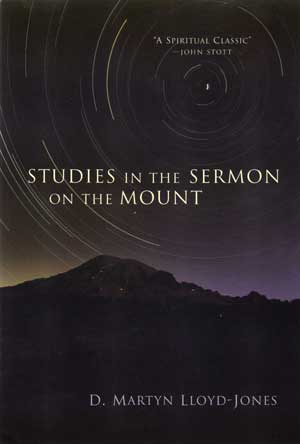
I saw this in the library, and I just had to get it. I like books on leadership, but not the standard ones - so this was a must buy - for 4 bucks!


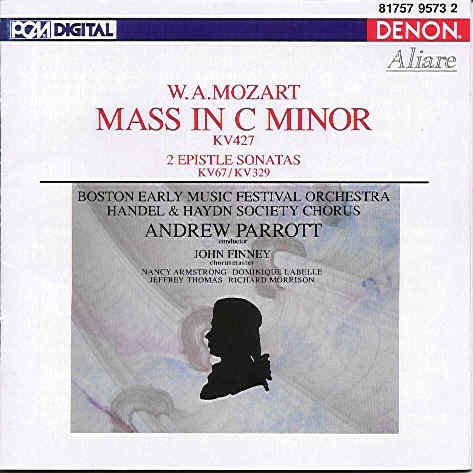
Been listening to more choral music lately, so this one seemed like a natural. Oh man! Did those folks know something about music!

Wednesday, March 29, 2006

Theophilus

Put yourself in the place of Theophilus, you want to know how this “Jewish religion” moved from Jerusalem to Rome. Also, you want to know more about what you believe than you do.

Meaning: lover of God
a Christian, probably a Roman, to whom Luke dedicated both his Gospel (Luke 1:3) and the Acts of the Apostles (1:1). Nothing beyond this is known of him. From the fact that Luke applies to him the title "most excellent", the same title Paul uses in addressing Felix (Acts 23:26; 24:3) and Festus (26:25), it has been concluded that Theophilus was a person of rank, perhaps a Roman officer.
Theophilus is the name to which the Gospel of Luke and the Acts of the Apostles is addressed. His life would coincide with the writing of Luke and Acts, sometime between 40-150, depending on which tradition one subscribes to. Coptic tradition asserts he was a Jew of Alexandria, while another tradition claims he was a converted Roman official, owing to the honorific, "most excellent" (Lk. 1:3). Yet another tradition maintains that this Theophilus was not a specific person, as "theophilus" means "lover of God", and thus the books could be addressed to anyone who fits that description.

In "The Acts of the Apostles." Dr. Luke writes about the activity and actions of the apostles as they take the message and ministry of Jesus to the First Century world. Beginning in verse one and through the ending verse of the book, Dr. Luke gave to his friend, Theophilus, an ongoing account of how the followers of Christ continued the witness and work of Christ under the power and guidance of the Holy Spirit. Dr. Luke invested all of his effort and energy in this one man to bear witness to him and to disciple him.

As Luke undertakes the opportunity to witness, he does so as the "least likely" in many people's opinion. He writes as the only Gentile writer in the New Testament and from the position of a layman.
Luke invested his time and energy writing the Gospel of Luke on a scroll approximately 25 feet long.
Some people argue that the name Theophilus originated from two Greek words that formed a compound word which means "God lovers." Their conjecture is that this refers to a category of people who may be identified as "God lovers." If you read in Luke 1:3, you find this possibility is ruled out because Luke addresses his Gospel to one entitled "most excellent Theophilus."

It was not uncommon for writers in literary circles to dedicate their books to distinguished persons. We have the example of the Jewish historian Josephus (A.D. 37-c.100), who dedicated his two-part work, Against Apion, to an individual named Epaphroditus.
Josephus introduced his first volume by addressing him as: "Epaphroditus, most excellent [kratiste] of men" (1:1). (In citations from Josephus, the first number will refer to his book number and the second to the numbers used in the Greek text which also appear in English translations.)
The second book of Against Apion began with these words: "By means of the former volume, my most honored Epaphroditus, I have demonstrated our antiquity..." (2:1). Here we see opening words that are strikingly similar to Luke's dedication.
Luke's dedication to his gospel implies that Theophilus may have been interested in discipleship, or was already a Christian. There, Luke told Theophilus that he wrote Luke-Acts for him, "So that you may know the certainty of the things you have been taught" (Luke 1:4). F.F. Bruce painted the following fairly reasonable portrait of Theophilus. He wrote: "It is quite probable that Theophilus was a representative member of the intelligent middle-class public at Rome whom Luke wished to win over to a less prejudiced and more favorable opinion of Christianity than that which was current among them....Theophilus had already learned something about the rise and progress of Christianity, and Luke's aim was to put him in possession of more accurate information than he already had," The International Commentary on the New Testament, "The Book of Acts," revised edition, page 29."
However, Luke must have had a much wider readership in view than just Theophilus. The fact that both the gospel and Acts have survived indicates that the two volumes were copied, widely distributed in the churches, and publicly read.
While not explicitly stated, Luke's purpose in Acts seems to be to show the continuing work of Jesus, carried out by the power of the Holy Spirit and through the agency of the Church. In short, Luke is saying that Jesus is alive, and his life and work proceed in the Church--and in greater power.

The Muratorian canon confirms the Lukan authorship of the Book of Acts: "Moreover the Acts of the Apostles are included in one book. Luke addressed them to the most excellent Theophilus, because the several events took place when he was present; he makes this plain by the omission of the passion of Peter and of the journey of Paul when he left Rome for Spain."

Thursday, March 23, 2006

What I'm Reading Now

What I'm listening to now...


Slechtvalk - At the Dawn of War. For when I am in a "metal mood". I just got this CD, and its good, but a little different. If you like Antestor and Extol then check this one out. You can find lyrics here: http://www.christianrocklyrics.com/slechtvalk.php

Tuesday, March 21, 2006

New post.

I haven't posted here for awhile.

I have read several books since my last post. Let's see, I read:

The White Plague by Frank Herbert - Pretty good. Fiction. A guy loses his family to an IRA bomb, then bioengineers a virus that only kills woman - so that the world can feel his pain. A little slow in parts, but it made me say "UH!" a couple of times.

Spies Among us by Ira Winkler - Pretty good. I had read an account of his getting into an office for penetration testing, and was hoping that the book was going to have alot more stories like that, but it didn't.

I then read Churches That Abuse by Ron Enroth. This book is almost 15 years old, but it seems as fresh today as back in 1992. Recommended reading!

Thursday, December 22, 2005

I just finished reading "On the Incarnation" by Athanasius, and WOW! What a great read! I read the actual book, but I wish I knew about the online online here: http://www.spurgeon.org/~phil/history/ath-inc.htm

This is an easy to read translation, and it has an Introduction by C.S. Lewis himself. The Introduction is a must read in itself. Check it out!

Wednesday, December 21, 2005

Wednesday, December 14, 2005

Just got the new Demon Hunter CD (The Triptych) this weekend, and it rocks! You can check out the lyrics here: http://www.christianrocklyrics.com/demonhunter.php

Tuesday, November 01, 2005


Passed the PMP last week! What a relief!

Got out and took some pics this past weekend...

This house was built around 1840.

Monday, October 17, 2005

Still studying for the PMP exam that I have scheduled for next Thursday. Hope I pass(this time).

Music I listened to today:
Vivaldi Violin Concertos
Steven Curtis Chapman - More to this Life
U2 - All that you can't leave behind
Saviour Machine - Legend I

Currently in the car:
Extol - The Blueprint Dives

It's getting to be fall - gotta get out and take some pics before winter sets in.

Sermon Preparation

Got his from David Hocking while I was in School of Ministry - maybe someone can use it.

SEVEN STEPS OF SERMON PREPARATION
By David Hocking
1. PRAY
Psalm 119:18,125,130; James 1:5-8
2. READ AND REREAD THE PASSAGE
Timothy 4:13; Revelation 1:3 (use various translations)
3. EXAMINE THE CONTEXT THOROUGHLY
A. Make a note of all conjunctions and adverbs
B. Consider the theme and organization of the book
C. Note the number of paragraphs
D. Determine if your passage is dependent upon that which precedes it or follows it
4. DISCOVER THE MEANING AND USAGE OF KEY WORDS
A. Find out how many times a given word is used (concordance)
B. Find out the meaning of the word (lexicon and dictionary)
C. Analyse the form of the word (verb, noun, participle, tense, voice mood, gender, number, etc.)
D. Compare other Scriptures that use the word (concordance and works like Treasury of Scripture
Knowledge)
5. DEVELOP THE OUTLINE FROM THE PASSAGE
(Never impose an outline upon a passage)
A. Note the number of paragraphs
B. Find the central point in each paragraph
C. List the main verbs
D. Place nouns & participles (verbal nouns) under each verb to which they relate or
upon which they are dependent (subjects and objects)
E. Put pronouns, adjectives, participles (verbal adjectives), and prepositional phrases under the
nouns they modify
F. Make your points dependent upon each main point immediately above them
G. Ask yourself what the connection is
Are they questions? Are they issues? Are they reasons? Are they insights? etc.
6. USE COMMENTARIES FOR ADDITIONAL HELP
A. REASONS to check the commentaries
1. To make sure you are not overlooking something
2. To see the possibilities of interpretation
3. To gain a greater understanding of the passage
4. To keep yourself from pride and arrogance over what "you" have discovered!
B. TYPES of commentaries
1. Sermonic -compilation of sermons that were actually preached
2. Devotional -emphasis on application (watch out for those that become allegorical when it is not indicated in the passage where symbolical language is involved)
3. Expository -emphasizes understanding of the passage and the context, relying upon a historical and grammatical approach to interpretation
4. Exegetical- emphasis on the meaning and usage of words
7. SELECT YOUR TITLE AND EVALUATE YOUR APPLICATIONS
A. Does it reflect what the passage actually teaches?
B. Does it touch on human need?
C. Does it communicate to this generation?

REMEMBER -You don't make the Bible powerful; it already is the power of God! What we need is the power of the Holy Spirit in our preparation as well as in our preaching!
Welcome to my Blog! I will be putting content on here soon!